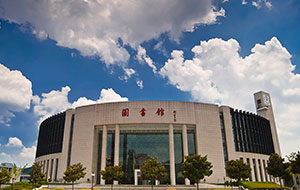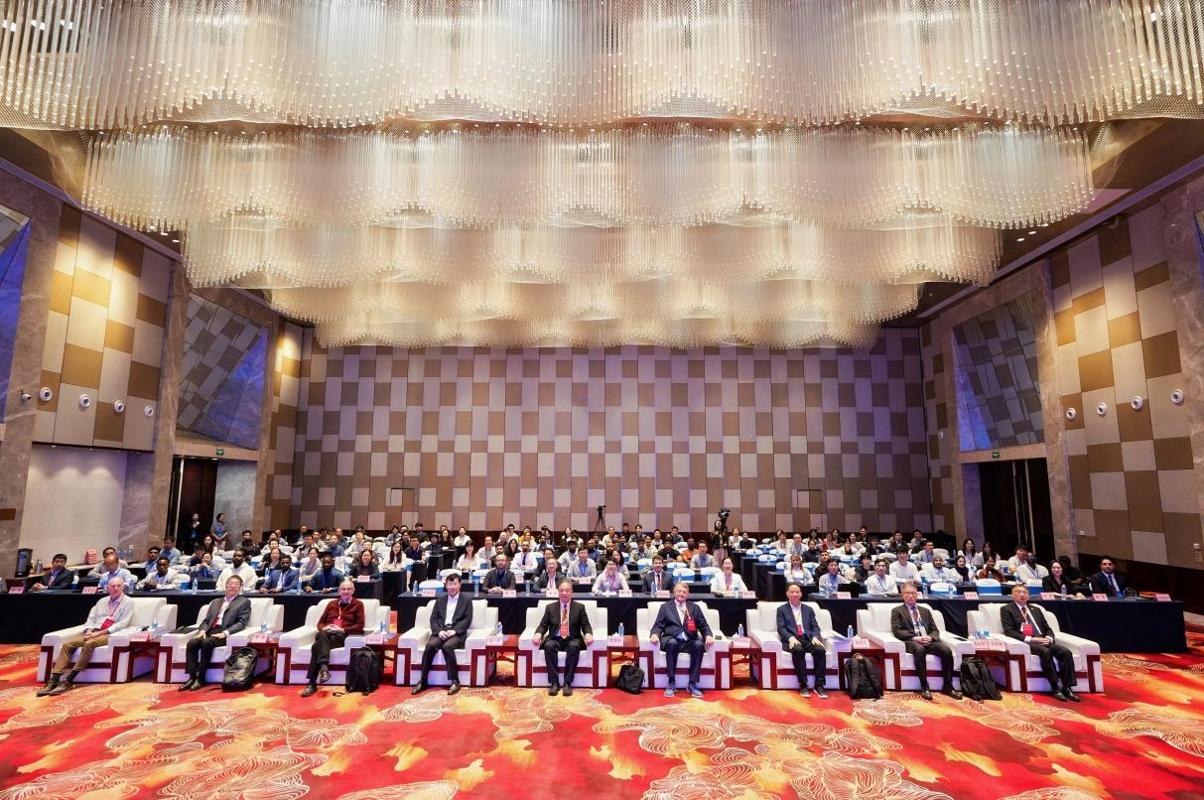
Forum Opening Ceremony
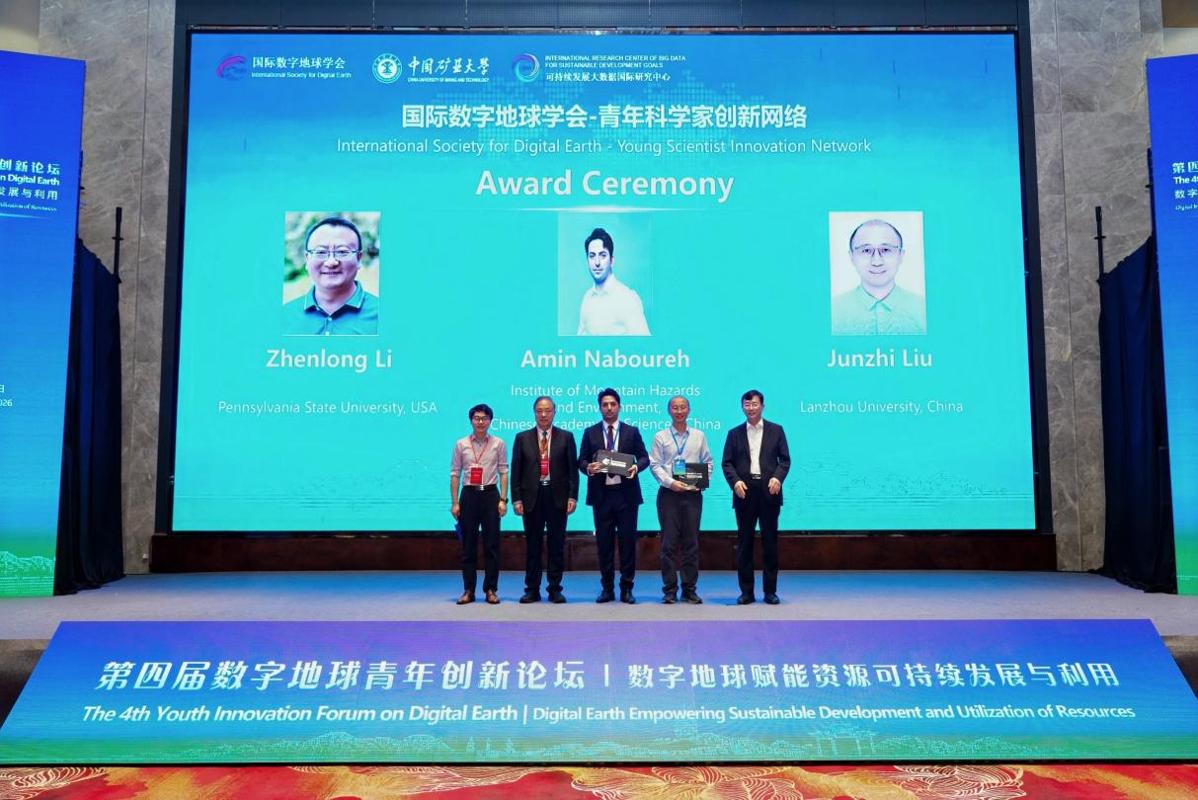
Young Scientist Award Ceremony
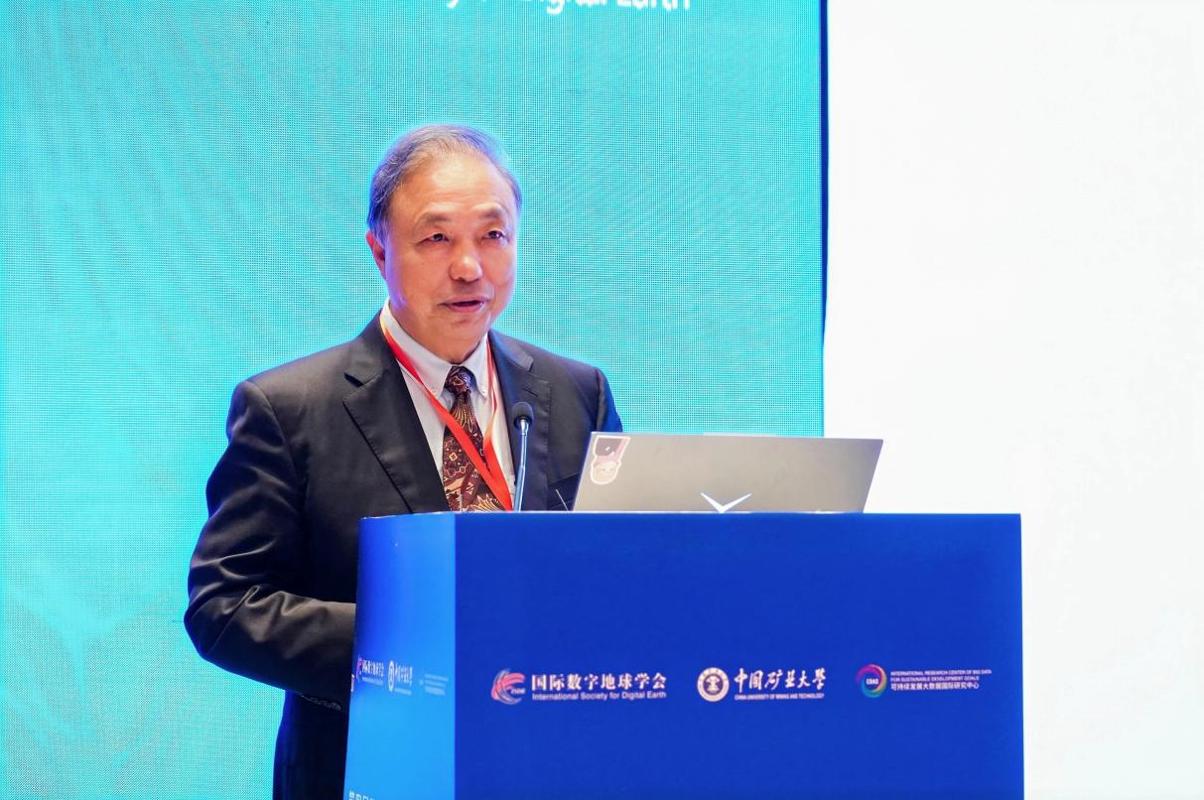
Academician Guo Huadong delivering a keynote report
From October 16 to 19, the 4th Digital Earth Youth Innovation Forum was held in Xuzhou, Jiangsu Province. The forum was co-hosted by the International Society for Digital Earth (ISDE), China University of Mining and Technology (CUMT), and the International Research Center of Big Data for Sustainable Development Goals (CBAS). With the theme “Digital Earth Empowering Sustainable Resource Development and Utilization,” the forum specially invited distinguished experts from across the globe, including Fellow Guo Huadong of the Chinese Academy of Sciences, Fellow Michael Batty of the British Academy, Fellow Milan Konečný of the International Eurasian Academy of Sciences, Tony Jakeman, former President of the International Environmental Modelling and Software Society (iEMSs), Li Songnian, Chair of the Academic Network of the United Nations Committee of Experts on Global Geospatial Information Management (UN-GGIM), and Fellow Paul Longley of the Academy of Social Sciences (UK). It attracted more than 200 leading experts, young scholars, representatives of international organizations, and industry representatives in the field of digital earth from 26 countries and regions.
At the opening ceremony, Tian Feng, Deputy Secretary of the CUMT Party Committee, delivered an address. On behalf of the university, he extended a warm welcome to the guests, and introduced CUMT’s disciplinary advantages in the energy and resources field and its achievements in the “Double First-Class” initiative. He pointed out that climate change, energy transition, and resource and environmental constraints are intertwined, and that geospatial big data, Earth observation, artificial intelligence, and digital twins are accelerating their integration. Digital Earth is continuously enhancing humanity’s ability to understand the Earth, perceive changes, simulate evolution, and assist decision-making, providing an important technological path for the country to implement the dual carbon goals and promote a green and low-carbon transition. He encouraged young researchers to focus on the forum’s theme of “Digital Earth Empowering Sustainable Resource Development and Utilization,” deepen interdisciplinary cooperation, and promote the application and development of digital earth technologies.
In his address, Wang Changlin, Vice President of the International Society for Digital Earth, pointed out that Digital Earth has developed into a new research paradigm integrating Earth big data, space-air-ground integrated observation, and artificial intelligence. Facing increasingly severe resource‑related pressures and climate change challenges, digital earth technologies are expected to enhance the level of resource monitoring, assessment, and management, and promote the sustainable utilization of resources. He stated that the Society will continue to support the growth of young scientists, deepen international cooperation, and promote cross-border scientific research collaboration and data sharing, contributing to the implementation of the UN 2030 Agenda for Sustainable Development.
At the opening ceremony, the “Young Scientist Award” of the ISDE Young Scientist Innovation Network was presented to recognize outstanding young scientists who have actively innovated in the field of digital earth.
During the academician plenary keynote session following the opening ceremony, Fellow Guo Huadong delivered a plenary report titled “Advancing Sustainable Development Goals with Earth Big Data.” The report reviewed the evolution of Earth big data, whose exponential growth and contributions are increasingly recognized by the United Nations and fields related to the Global Sustainable Development Goals. He pointed out that the rapid growth of Earth big data is driving the innovative development of Earth science research paradigms, and that the Chinese Academy of Sciences’ Category A Strategic Priority Research Program “Big Earth Data Science Engineering” (CASEarth) and a series of research projects undertaken by CBAS have provided sustained momentum for this process. Through open data products, shared technical capabilities, and monitoring of key SDG indicators, the related work continues to help achieve the Global Sustainable Development Goals. He called for more stakeholders to join the “Digital Sustainable Development International Science Program (DSP),” working hand in hand with 58 institutions from 35 countries to jointly build a global observation network, develop models and digital indicators, and provide digital solutions for sustainable development in 2030 and beyond.
Professor Milan Konečný and Professor Li Songnian of Toronto Metropolitan University, Canada, delivered keynote reports on “A New Digital Earth Architecture and Solutions for Disaster Risk Prevention and Control” and “UN-GGIM Empowering the Future Digital Earth,” respectively. In addition, Professor Yang Dawen of Tsinghua University, Professor Paul Longley of University College London (UK), Professor Li Xin, Deputy Director of the Institute of Tibetan Plateau Research of the Chinese Academy of Sciences, Professor Tony Jakeman of the Australian National University, Professor Michael Batty of University College London (UK), Professor Pei Tao, Dean of the Zhengzhou Institute of Higher Research at Henan Polytechnic University, Professor Ali Mansourian, Director of the GIS Centre at Lund University (Sweden), and Professor Shen Jian, Dean of the School of Resources and Geosciences at CUMT, delivered keynote reports on frontier topics in the field of digital earth. The content covered directions such as geospatial big data, spatial analysis, artificial intelligence, and energy mapping, demonstrating the development trend of the accelerated integration of geospatial technology, computational modeling, and spatial intelligence.
The forum received 125 reports, with oral presentations delivered in 21 parallel sessions. The sessions focused on themes such as urban governance and planning, precision agriculture and water and soil resources, coal mine methane emission monitoring, ocean remote sensing and digital ocean, GeoAI empowering smart planning and spatial governance, digital twins for deep earth resources and energy, remote sensing and artificial intelligence empowering carbon neutrality, spatiotemporal big data and geospatial intelligence, and energy big data. Young scholars from universities and research institutions at home and abroad presented their latest research findings. Concurrently with the forum, an academic exchange and development seminar for the journal Big Earth Data was held.
The forum closed on the afternoon of October 18. At the closing ceremony, five papers were selected and awarded the “Outstanding Paper Award,” and 23 oral presentations were conferred the “Best Presentation Award.” Honorary awards were also presented to outstanding session conveners.
At the closing ceremony, it was announced that the 5th Digital Earth Youth Innovation Forum will be held in Lund, Sweden, in June 2027. Professor Ali Mansourian, Director of the GIS Centre at Lund University, cordially invited young scholars to attend and received the forum flag on behalf of the host institution.
The ISDE Young Scientist Innovation Network was established on May 26, 2023, aiming to empower young scientists in the field of digital earth, jointly promote the concept of digital earth, drive digital earth technological innovation, and make positive contributions to leveraging digital technologies for global sustainable development. The network hosts the Digital Earth Youth Innovation Forum series and the Digital Earth Youth Innovation Lecture online exchange activities, creating an open, equal, and free top-level academic exchange platform for young scientists in the field of digital earth. Since the first Digital Earth Youth Innovation Forum was held in Beijing in 2023, it has become an annual series of conferences. The second and third forums were held in Hong Kong, China, and Nairobi, Kenya, respectively, attracting expert representatives from around the world.